
Capsular Pattern For Frozen Shoulder
Capsular Pattern For Frozen Shoulder - Over time, symptoms get better, usually within 1 to 3 years. The actual cause of adhesive capsulitis is a matter of debate. A capsular pattern is a proportional motion restriction unique to every joint that indicates irritation of the entire joint. Web frozen shoulder, also called adhesive capsulitis, is a condition involving pain and stiffness in your shoulder joint. In the second phase, the frozen or stiff phase, the pain progressively decreases as does shoulder motion and individuals commonly experience increased It affects mainly people ages 40 to 60 with women affected more often than men. Web review treatment and management options for patients with frozen shoulder/adhesive capsulitis. Web patients with frozen shoulder commonly present with rom restrictions in a capsular pattern. Web adhesive capsulitis, also known as “frozen shoulder”, is a common shoulder condition characterized by pain and decreased range of motion in a capsular pattern (external rotation is more limited than abduction, which is more limited than internal rotation). In clinical practice, the strategy opted to treat frozen shoulder often depends upon. Web global reduction in range of motion with a capsular pattern, defined as disproportionately severe loss of passive external rotation in the affected shoulder with arm by the side, over other movements. Web frozen shoulder, medically known as adhesive capsulitis, is a condition causing significant shoulder pain and affects between 2% and 5% of people, mainly those aged 40 to 60. It’s more common in women, affecting around 70% of those diagnosed. Web patients with frozen shoulder commonly present with rom restrictions in a capsular pattern. As is evident from the name, this is an arthroscopic shoulder surgery where a small camera is inserted into the shoulder joint. Explain interprofessional team strategies for improving care coordination and communication to advance the management of frozen shoulder and achieve optimal outcomes. Web frozen shoulder, also called adhesive capsulitis, involves stiffness and pain in the shoulder joint. Web a capsular pattern is therefore evident with most loss of external rotation followed by flexion/abduction and then internal rotation thawing stage; Signs and symptoms typically begin slowly, then get worse. In clinical practice, the strategy opted to treat frozen shoulder often depends upon. As is evident from the name, this is an arthroscopic shoulder surgery where a small camera is inserted into the shoulder joint. Web adhesive capsulitis, also known as “frozen shoulder,” is a common shoulder condition characterized by pain and decreased range of motion, especially in external rotation. Web frozen shoulder, or adhesive capsulitis, describes the common shoulder condition characterized by. Web only a few require operative intervention in the form of manipulation under anaesthesia (mua) or arthroscopic capsular release (acr). Web frozen shoulder, medically known as adhesive capsulitis, is a condition causing significant shoulder pain and affects between 2% and 5% of people, mainly those aged 40 to 60. Web frozen shoulder, or adhesive capsulitis, describes the common shoulder condition. Frozen shoulder is the stiffening of the shoulder due to scar tissue, which results in painful movement and loss of motion. Web frozen shoulder, also called adhesive capsulitis, involves stiffness and pain in the shoulder joint. Web adhesive capsulitis or primary frozen shoulder is the idiopathic type of frozen shoulder, a painful inflammatory condition of the glenohumeral joint, and is. Web adhesive capsulitis (also known as frozen shoulder) is a condition of the shoulder characterized by functional loss of both passive and active shoulder motion commonly associated with diabetes, and thyroid disease. Web for example in frozen shoulder, the pathology site is the rotator interval capsule which is on the anterior aspect of the capsule and the typical presentation is. Web global reduction in range of motion with a capsular pattern, defined as disproportionately severe loss of passive external rotation in the affected shoulder with arm by the side, over other movements. Web review treatment and management options for patients with frozen shoulder/adhesive capsulitis. Web frozen shoulder, also called adhesive capsulitis, involves stiffness and pain in the shoulder joint. Web. Web adhesive capsulitis or primary frozen shoulder is the idiopathic type of frozen shoulder, a painful inflammatory condition of the glenohumeral joint, and is characterized by restriction of active and passive range of motion in a capsular pattern. Explain interprofessional team strategies for improving care coordination and communication to advance the management of frozen shoulder and achieve optimal outcomes. The. Web adhesive capsulitis, also known as “frozen shoulder”, is a common shoulder condition characterized by pain and decreased range of motion in a capsular pattern (external rotation is more limited than abduction, which is more limited than internal rotation). Web what is frozen shoulder (adhesive capsulitis)? Web patients present with constant shoulder pain and range of motion (rom) limitations in. Symptoms usually start slowly and get worse over time. Web adhesive capsulitis or primary frozen shoulder is the idiopathic type of frozen shoulder, a painful inflammatory condition of the glenohumeral joint, and is characterized by restriction of active and passive range of motion in a capsular pattern. Fs can be differentiated into primary (idiopathic onset) and secondary onset. Web the. Web the usual surgical treatment of a frozen shoulder is called an arthroscopic capsular release. Web adhesive capsulitis, also known as “frozen shoulder,” is a common shoulder condition characterized by pain and decreased range of motion, especially in external rotation. Web frozen shoulder, or adhesive capsulitis, describes the common shoulder condition characterized by painful and limited active and passive range. The actual cause of adhesive capsulitis is a matter of debate. Web patients with frozen shoulder commonly present with rom restrictions in a capsular pattern. Web adhesive capsulitis or primary frozen shoulder is the idiopathic type of frozen shoulder, a painful inflammatory condition of the glenohumeral joint, and is characterized by restriction of active and passive range of motion in. Web what is frozen shoulder (adhesive capsulitis)? Web only a few require operative intervention in the form of manipulation under anaesthesia (mua) or arthroscopic capsular release (acr). It’s more common in women, affecting around 70% of those diagnosed. Web adhesive capsulitis, also known as “frozen shoulder,” is a common shoulder condition characterized by pain and decreased range of motion, especially in external rotation. Starts when range of movement at the joint begins to improve. In clinical practice, the strategy opted to treat frozen shoulder often depends upon. A capsular pattern is a proportional motion restriction unique to every joint that indicates irritation of the entire joint. Web patients present with constant shoulder pain and range of motion (rom) limitations in a capsular pattern (external rotation (er)> abduction (abd)> flexion (flx)> and internal rotation (ir)). Web frozen shoulder, also called adhesive capsulitis, is a condition involving pain and stiffness in your shoulder joint. Web frozen shoulder (also called adhesive capsulitis) is a common disorder that causes pain, stiffness, and loss of normal range of motion in the shoulder. The actual cause of adhesive capsulitis is a matter of debate. Access free multiple choice questions on this topic. Web frozen shoulder, or adhesive capsulitis, describes the common shoulder condition characterized by painful and limited active and passive range of motion (rom). Web adhesive capsulitis, also known as “frozen shoulder”, is a common shoulder condition characterized by pain and decreased range of motion in a capsular pattern (external rotation is more limited than abduction, which is more limited than internal rotation). The condition develops in three stages. It affects mainly people ages 40 to 60 with women affected more often than men.
Arthroscopic Capsular Release for Frozen Shoulder YouTube
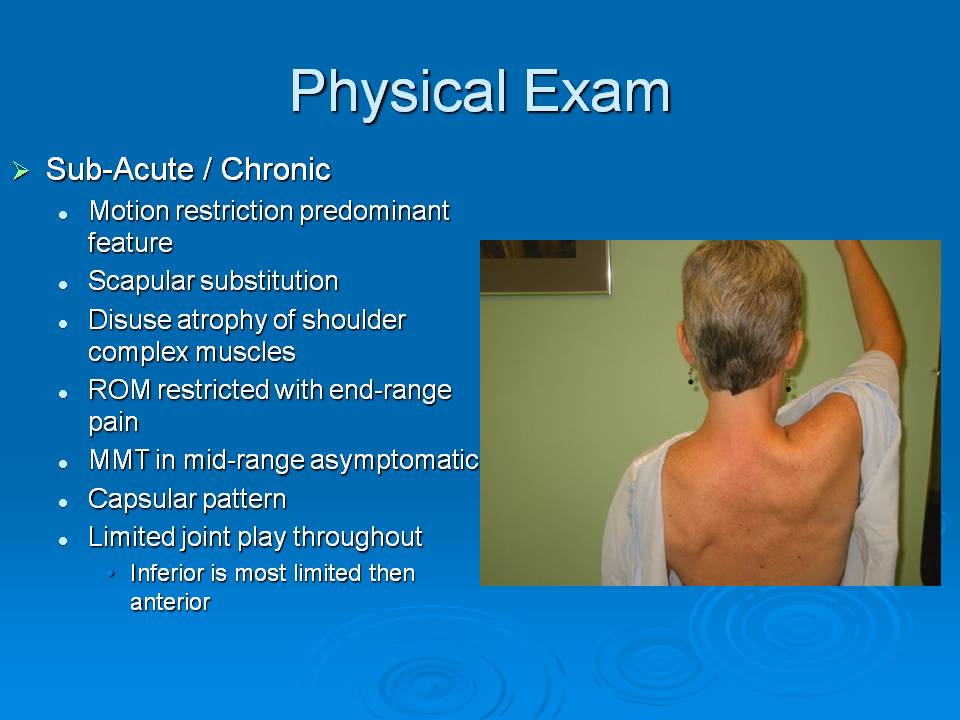
Capsular pattern of the shoulder labquiz

Adhesive Capsulitis / Frozen Shoulder Murdoch Orthopaedic Clinic

Frozen shoulder Adhesive capsulitis of the shoulder

Frozen Shoulder Capsular Pattern All You Need To Know BioFlex Pakistan
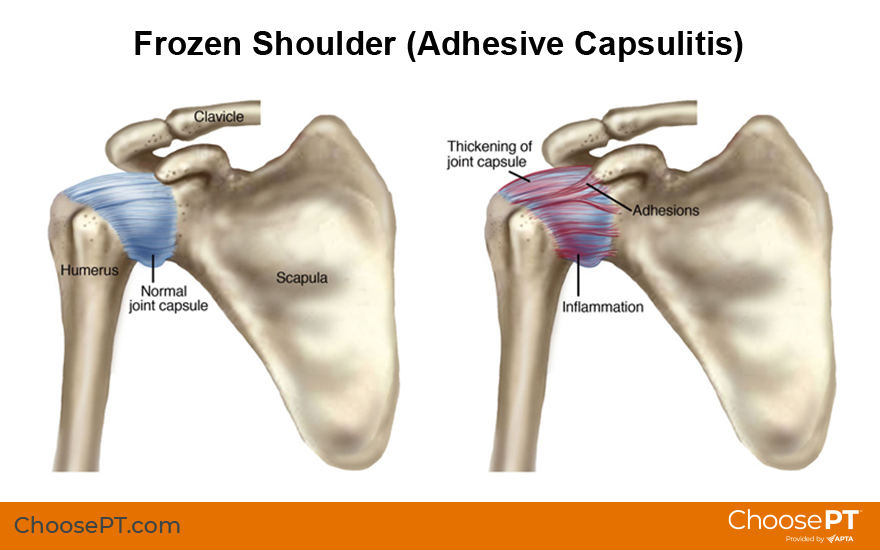
Guide Physical Therapy Guide to Frozen Shoulder (Adhesive Capsulitis

27Physiocouk manchesterphysio Joint Capsular

Frozen Shoulder Therapists in Galway Therapists in Galway

Frozen shoulder Adhesive capsulitis of the shoulder
Frozen Shoulder Adhesive Capsulitis OrthoInfo AAOS
1 Adhesive Capsulitis Is Predominantly An Idiopathic Condition And Has An.
Over Time, Symptoms Get Better, Usually Within 1 To 3 Years.
Web Adhesive Capsulitis Or Primary Frozen Shoulder Is The Idiopathic Type Of Frozen Shoulder, A Painful Inflammatory Condition Of The Glenohumeral Joint, And Is Characterized By Restriction Of Active And Passive Range Of Motion In A Capsular Pattern.
Web Global Reduction In Range Of Motion With A Capsular Pattern, Defined As Disproportionately Severe Loss Of Passive External Rotation In The Affected Shoulder With Arm By The Side, Over Other Movements.
Related Post: