
Carpers Patterns Of Knowing
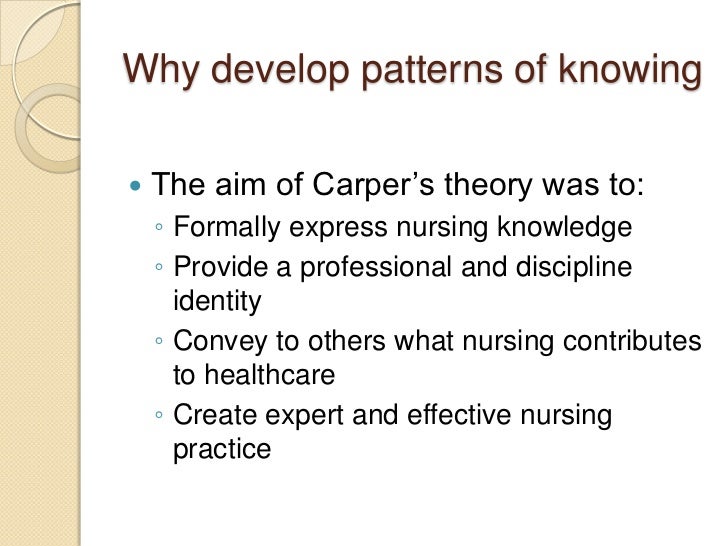
Carpers Patterns Of Knowing - Empirics, ethics, aesthetics, and personal knowing. (3) the component of a personal. In this article, now a classic publication with a profound effect on the discipline, carper identified four patterns of knowing: Her work marked the beginn ing of a new. First, they critique the major strengths and limitations of the article. (2) esthetics, the art of nursing; Empirical, personal, ethical, and esthetic. The origin and evolution of the ways of knowing are discussed and applied to current and proposed hope research with bereaved palliative caregivers,. Her work marked the beginning of a new phase of thinking among nursing researchers ( 3 ). Esthetics as a means of knowing in nursing is part. Web through illustrations from literature and the performing arts, the authors address carper's patterns of knowing in the context of an emerging philosophical shift. Carper's patterns of knowing in nursing have been consistently cited in the nursing literature since they appeared in 1978. The origin and evolution of the ways of knowing are discussed and applied to current and proposed hope research with bereaved palliative caregivers,. Web in the 1970s, carper ( 1) introduced fundamental patterns of knowing in nursing including empirical, aesthetic, personal, and ethical knowing ( 2 ). Web in this foundational article, dr. Web carper's 31 seminal work outlines ways of knowing in nursing. Web fundamental patterns of knowing in nursing. Empirical, personal, ethical, and esthetic. Web in the late 1970s, nursing professor barbara a. Web research examining the measurable relationship between hope and bereavement can be categorized as carper’s first fundamental pattern of knowing in nursing, which is the empirical, factual, and descriptive nature of knowledge. The four ways of knowing are empirics—the science of nursing, esthetics—the art of nursing, the component of personal knowledge in nursing, and ethics—the component of moral knowledge in nursing. Fundamental patterns of knowing in nursing. Web fundamental patterns of knowing in nursing. Web carper identified the following ways of knowing: Web in 1978, barbara carper named personal knowing as a. (2) aesthetics knowing, the art of nursing; Web in 1978, barbara carper published the article titled “fundamental patterns of knowing in nursing”. And (4) ethical knowing, the component of moral knowledge of nursing. Web but carper’s influential work affirmed that the real practice of nursing went beyond science and, in fact, is significantly shaped by the other three patterns of. Her work marked the beginning of a new phase of thinking among nursing researchers ( 3 ). Web carper identified the four patterns of knowing as: There are four main patterns: Empirics, ethics, aesthetics, and personal knowing. Empirics, ethics, esthetics and personal knowing. First, they critique the major strengths and limitations of the article. Web in the 1970s, carper ( 1) introduced fundamental patterns of knowing in nursing including empirical, aesthetic, personal, and ethical knowing ( 2 ). (3) personal knowledge in nursing; Web in 1978, barbara carper named personal knowing as a fundamental way of knowing in our discipline. By that, she. Her work marked the beginn ing of a new. It is the type of knowledge that is most often associated with science. (3) personal knowledge in nursing; Web carper identified the following ways of knowing: In this article, now a classic publication with a profound effect on the discipline, carper identified four patterns of knowing: First, they critique the major strengths and limitations of the article. Web through illustrations from literature and the performing arts, the authors address carper's patterns of knowing in the context of an emerging philosophical shift. Her work marked the beginning of a new phase of thinking among nursing researchers ( 3 ). Web but carper’s influential work affirmed that the. The four ways of knowing are empirics—the science of nursing, esthetics—the art of nursing, the component of personal knowledge in nursing, and ethics—the component of moral knowledge in nursing. Web research examining the measurable relationship between hope and bereavement can be categorized as carper’s first fundamental pattern of knowing in nursing, which is the empirical, factual, and descriptive nature of. Web carper identified the four patterns of knowing as: First, they critique the major strengths and limitations of the article. Carper's patterns of knowing in nursing have been consistently cited in the nursing literature since they appeared in 1978. Web in the 1970s, carper ( 1) introduced fundamental patterns of knowing in nursing including empirical, aesthetic, personal, and ethical knowing. Web carper's 1978 article in the premiere issue of advances in nursing science encouraged nurses to consider four fundamental patterns of knowing.through illustrations from literature and the performing arts, the authors address carper's patterns of knowing in the context of an emerging philosophical shift. Web carper identified the four patterns of knowing as: In this article, now a classic publication. (2) aesthetics knowing, the art of nursing; Web carper's 1978 article in the premiere issue of advances in nursing science encouraged nurses to consider four fundamental patterns of knowing.through illustrations from literature and the performing arts, the authors address carper's patterns of knowing in the context of an emerging philosophical shift. Her work marked the beginn ing of a new.. Web in the 1970s, carper (1) introduced fundamental patterns of. Empirical, personal, ethical, and esthetic. Her work marked the beginn ing of a new. (3) the component of a personal. (3) personal knowledge in nursing; Web research examining the measurable relationship between hope and bereavement can be categorized as carper’s first fundamental pattern of knowing in nursing, which is the empirical, factual, and descriptive nature of knowledge. Her work marked the beginning of a new phase of thinking among nursing researchers ( 3 ). “(1) empirical knowing, the science of nursing; In this article, now a classic publication with a profound effect on the discipline, carper identified four patterns of knowing: (2) aesthetics knowing, the art of nursing; Fundamental patterns of knowing in nursing. Knowing in nursing including empirical, aesthetic, personal, and. Web in 1978, barbara carper named personal knowing as a fundamental way of knowing in our discipline. Web through illustrations from literature and the performing arts, the authors address carper's patterns of knowing in the context of an emerging philosophical shift. (2) esthetics, the art of nursing; Web carper identified the four patterns of knowing as: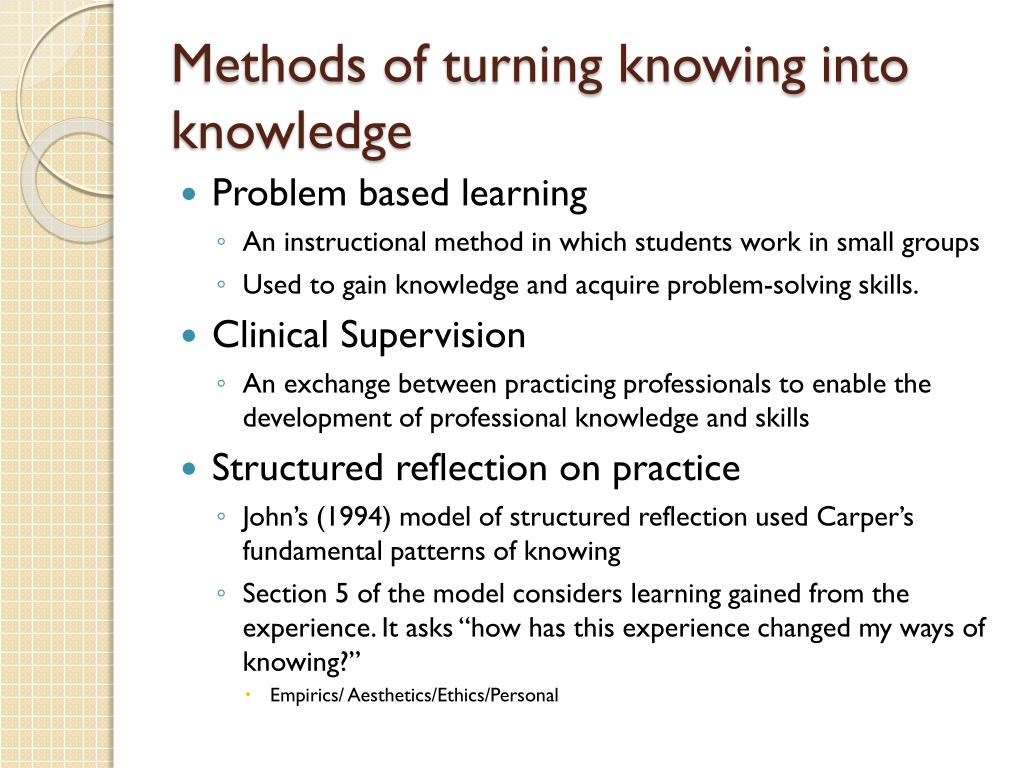
PPT Carper (1978) Fundamental patterns of knowing PowerPoint
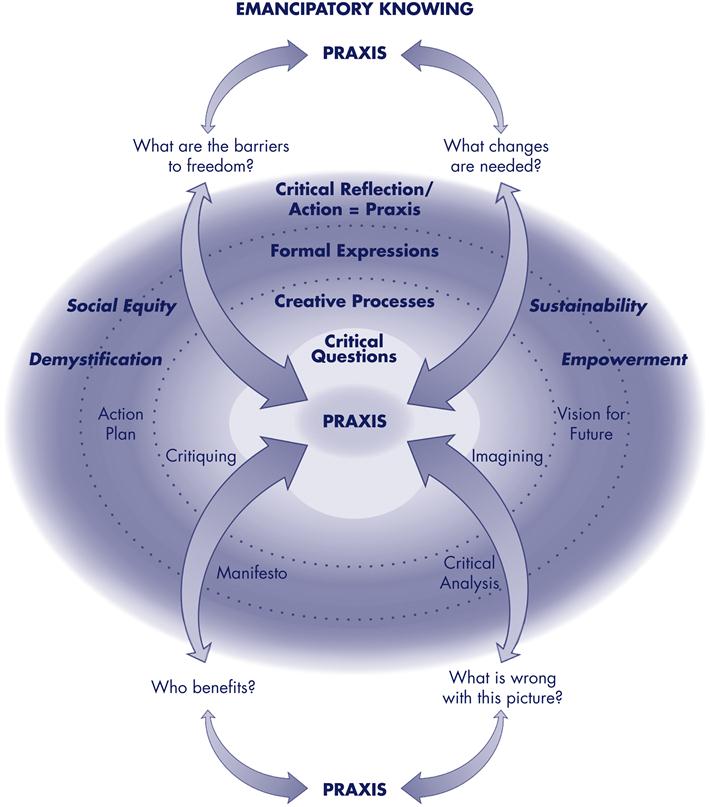
FUNDAMENTAL PATTERNS OF KNOWING IN NURSING CARPER PDF

Fundamental Patterns of Knowing in Nursing Nursology
Carpers Four Patterns of Knowing PDF Knowledge Theory
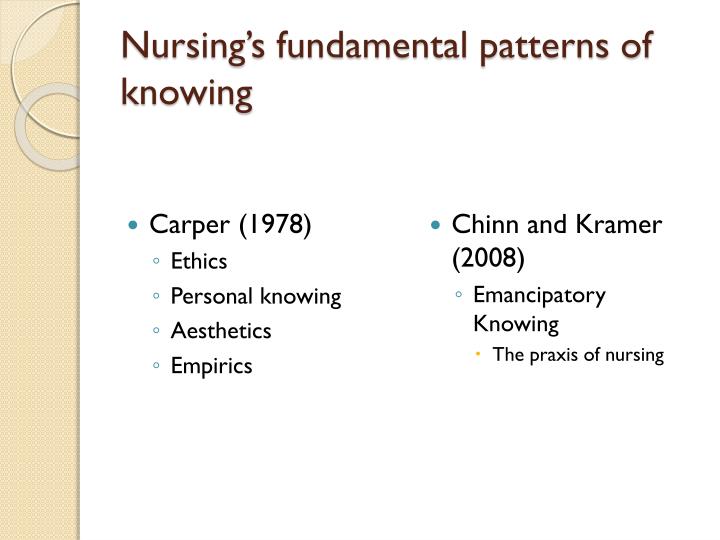
PPT Carper (1978) Fundamental patterns of knowing PowerPoint

Taxonomic Findings Mapped Onto Carper's Four Patterns of Knowing in
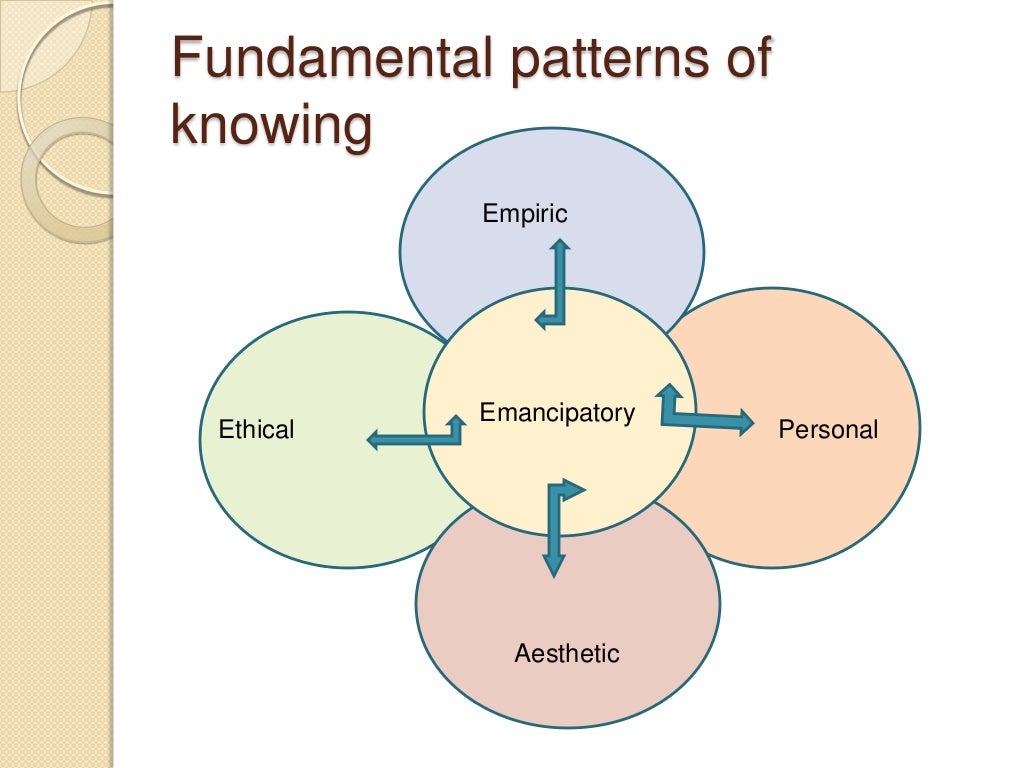
Nursings fundamental patterns of knowing
![Carper (1978) Fundamental patterns of knowing [PPT Powerpoint]](https://cdn.vdocument.in/doc/1200x630/568138cf550346895da089de/carper-1978-fundamental-patterns-of-knowing.jpg?t=1665721428)
Carper (1978) Fundamental patterns of knowing [PPT Powerpoint]
Ncm 100 Carpers Pattern of Knowing Knowledge Aesthetics
Nursings fundamental patterns of knowing
Carper's Patterns Of Knowing In Nursing Have Been Consistently Cited In The Nursing Literature Since They Appeared In 1978.
Web Carper's Ways Of Knowing In Nursing, Empirics, Esthetics, Personal Knowing, And Ethics, Provide A Guide To Holistic Practice, Education, And Research.
Web In This Foundational Article, Dr.
Web Fundamental Patterns Of Knowing In Nursing.
Related Post:

